From Doubt to Destiny: New York Knicks’ Championship Run for the Ages

Alta Sports3 days ago · 205 views
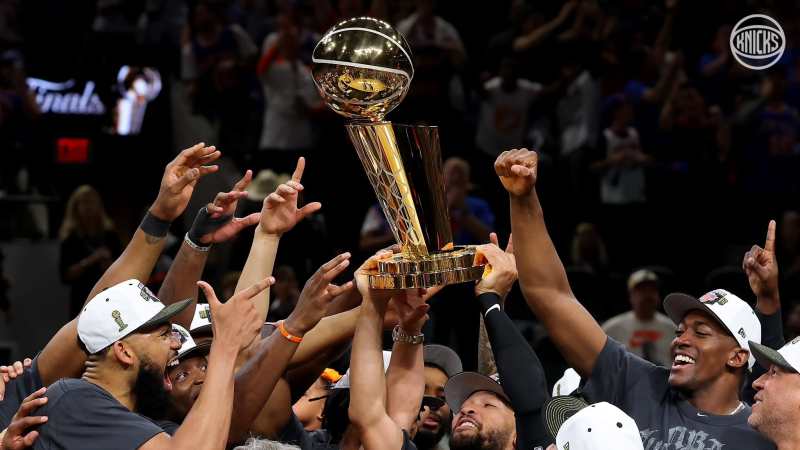
Photo: New York Knicks/Facebook
By Rafael Bandayrel
The New York Knicks entered the season carrying the sting of last year’s playoff collapse, when they were embarrassed by Tyrese Haliburton and the Indiana Pacers. That disappointment didn’t lower the expectations, though. New York was no longer a feel-good contender. They were a team expected to prove something.
On paper, they were still considered one of the top threats in the Eastern Conference, but the path to a championship looked blocked by the league’s heavyweights out West—the Oklahoma City Thunder, Denver Nuggets, Minnesota Timberwolves, and the rising San Antonio Spurs. Even the most optimistic projections had New York as a dark horse at best.
Midseason, they flashed their potential by winning the 202-26 NBA Cup, ironically defeating San Antonio in the final. But the achievement was treated with caution around the league. History wasn’t on their side as no NBA Cup winner had ever gone on to win the Larry O’Brien Trophy. As such, many viewed it as nothing more than a hot stretch in December rather than a true championship indicator.
The playoffs initially did little to quiet the doubts. Against a young and hungry Atlanta Hawks team, the Knicks fell into a 2-1 series deficit in the first round, and questions about their ceiling returned immediately. Were they truly built for a title run, or just another high-profile team destined to fall short?
But once they survived, everything changed. New York flipped the switch in a way few teams can, sweeping the Philadelphia 76ers in the second round before doing the same to the Cleveland Cavaliers in the Eastern Conference Finals. By the time they reached the NBA Finals, the narrative had shifted from doubt to destiny.
That set the stage for a heavyweight clash with the Spurs, who had just eliminated Oklahoma City and were widely seen as the team to beat behind Victor Wembanyama. New York answered immediately, opening the series with two stunning wins to extend their playoff winning streak, gaining control of the Finals.
San Antonio responded in Game 3, but Game 4 became the defining moment of the Knicks’ entire season. Down 29 points, New York produced the greatest comeback in Finals history, capped by an OG Anunoby tip-in off a missed three from Jalen Brunson. It was the kind of win that doesn’t just swing a series—it breaks it.
From there, Brunson closed the story himself. In Game 5, he delivered a 45-point masterpiece, the highest scoring Finals performance ever by a Knick, sealing the championship and cementing his place in franchise history. He also claimed Finals MVP, completing a season arc that began with skepticism and ended with New York at the top of the basketball world.
All comments 8
love paige
 The better Brunson performs, the more I feel the stupidity of the Dallas Mavericks management...
3 days agoReply
 1
1
Noven Cruz Sican
Congrats Knicks!!!!3 days agoReply
1
Antonio Chong
This championship ring should be awarded to Fox...3 days agoReply
1
Jet Levalib
Well deserve for the Knicks.3 days agoReply
1
Sherman Macalinao
3 days agoReply
0
Elite Role Players
3 days agoReply
1
amateur NBA expert
3 days agoReply
1
Dodong Sports
3 days agoReply
1No more comments
7
8
1
Share